
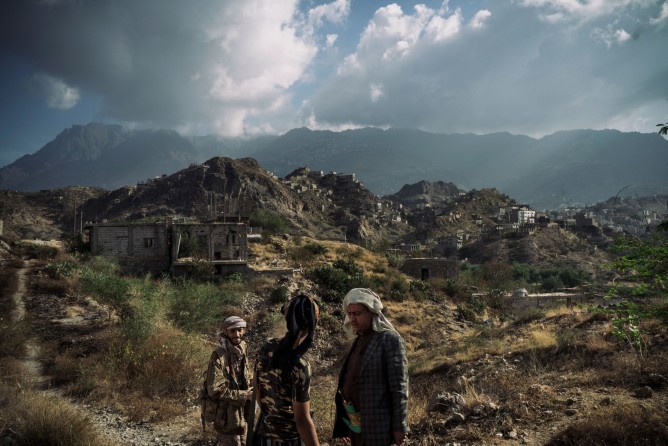
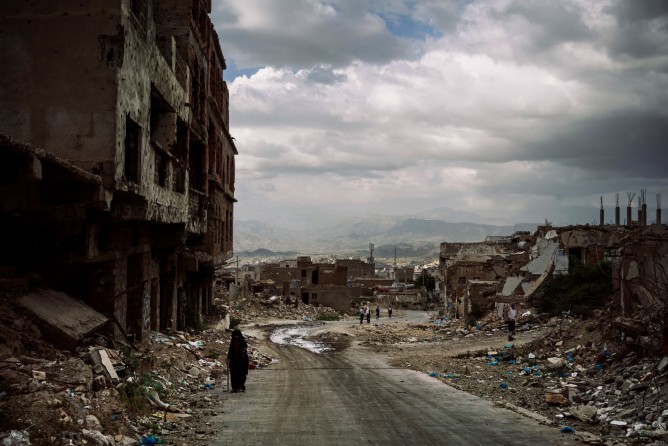
Both photos and captions from the Pulitzer website that briefly describe some of the works from the award winning photographer Lorenzo Tugnoli. Both follow a trend of having a story behind the photo, they both provide almost an eerie feeling to them. The first one above, of Abdullah, we know that he had lost his leg at the same spot two years prior to the photo, the background information provides enough for a story in a viewers mind. The scenery in the background is also somewhat beautiful, the mountains and blue sky, how the sunlight is peering in through the clouds. It all creates a certain contrast that brings the photo together. The second photo represents something more tragic though, the destruction of the town provides a sense of sorrow for the viewers. It provides a depth with the objects in the photo, the twisted dirt road, the same mountainous terrain seen in the first photo as well is seen in the background, blended with the dark clouds.
In both of the photos, the photographer uses rule of thirds. He breaks up the medium into sections in order to create art. The photographer was able to make not-so beautiful scenery look appealing by focusing on composition. In the second picture, he uses leading lines to shift the viewers focus to the scenery in the background.
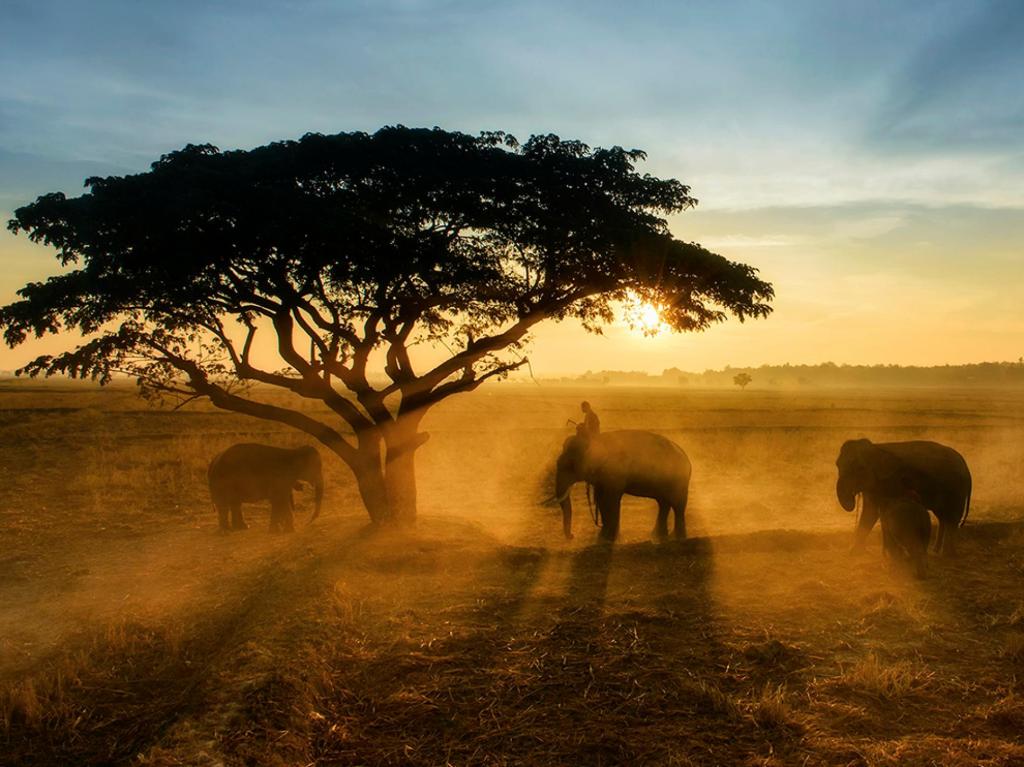
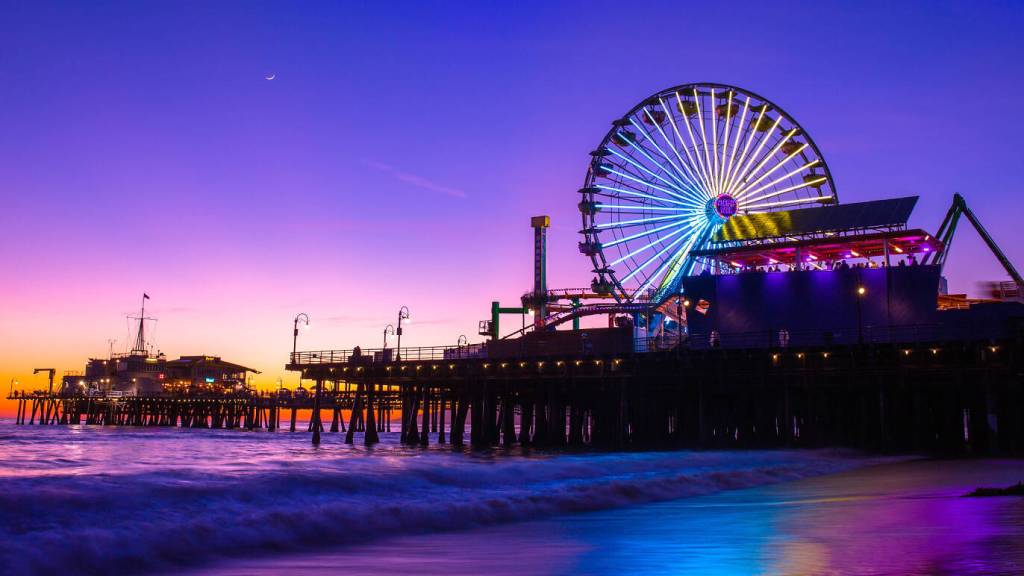
Below are three photos I found intriguing/ somewhat meaningful to me, the first two are both from two different national geographic photographers (both stated under their photo) and the third another more random one. Nature has always been relaxing to me, I have never been to Africa and I have always wanted to travel there at some point to say I have been, to also see the wildlife in deserts like such. The second photo I find beautiful and visually appealing because of the somewhat symmetrical feeling, the way the rocks are formed. The last photo is of the Santa Monica pier in California, it was the first place I visited on my first trip to California. Since then I decided that after college California is the place I want to be and I still plan on moving there after, I even plan to get a tattoo of the Santa Monica pier soon.

This is an example post, originally published as part of Blogging University. Enroll in one of our ten programs, and start your blog right.
You’re going to publish a post today. Don’t worry about how your blog looks. Don’t worry if you haven’t given it a name yet, or you’re feeling overwhelmed. Just click the “New Post” button, and tell us why you’re here.
Why do this?
The post can be short or long, a personal intro to your life or a bloggy mission statement, a manifesto for the future or a simple outline of your the types of things you hope to publish.
To help you get started, here are a few questions:
You’re not locked into any of this; one of the wonderful things about blogs is how they constantly evolve as we learn, grow, and interact with one another — but it’s good to know where and why you started, and articulating your goals may just give you a few other post ideas.
Can’t think how to get started? Just write the first thing that pops into your head. Anne Lamott, author of a book on writing we love, says that you need to give yourself permission to write a “crappy first draft”. Anne makes a great point — just start writing, and worry about editing it later.
When you’re ready to publish, give your post three to five tags that describe your blog’s focus — writing, photography, fiction, parenting, food, cars, movies, sports, whatever. These tags will help others who care about your topics find you in the Reader. Make sure one of the tags is “zerotohero,” so other new bloggers can find you, too.
Have a WordPress.com account? Log in now.

