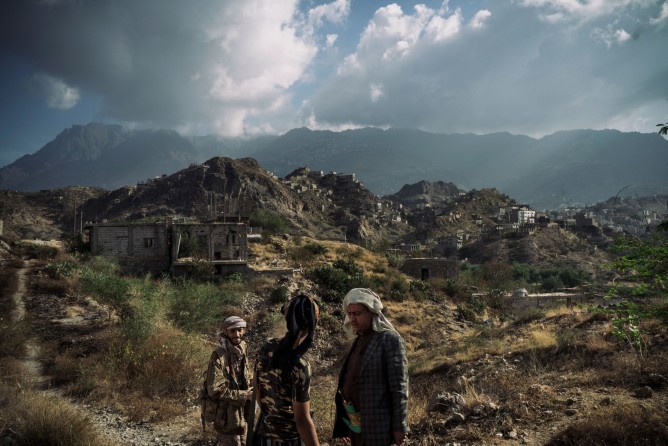
“Abdullah Abdul Wahed Mansour, right, stands with his comrades on the front lines of an area called al Zunuj on the north side of the ancient city of Taiz. He lost a leg in a land mine explosion on this front two years ago. The front line that encircles the city has not moved significantly in the past two years. Sporadic gunfire is exchanged, but neither side is seriously pushing to gain territory.” (December 31, 2018)
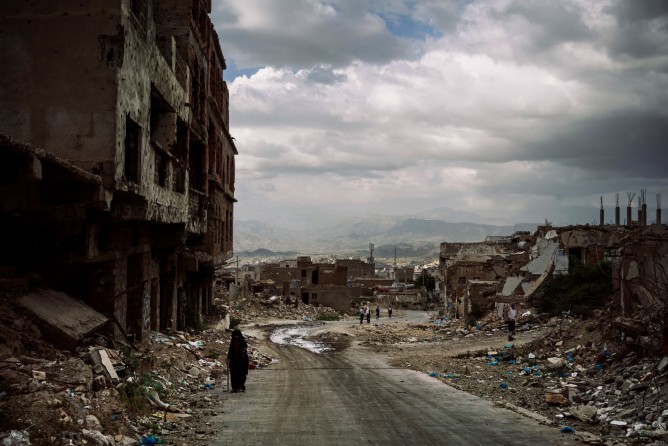
“A woman walks past a destroyed building in the al Jahmaliya area. The area was heavily damaged during fighting between Houthi rebels and local militias struggling to retake the city. More recently, the area was shaken by fighting among the various militias that now control the city.” (December 31, 2018)
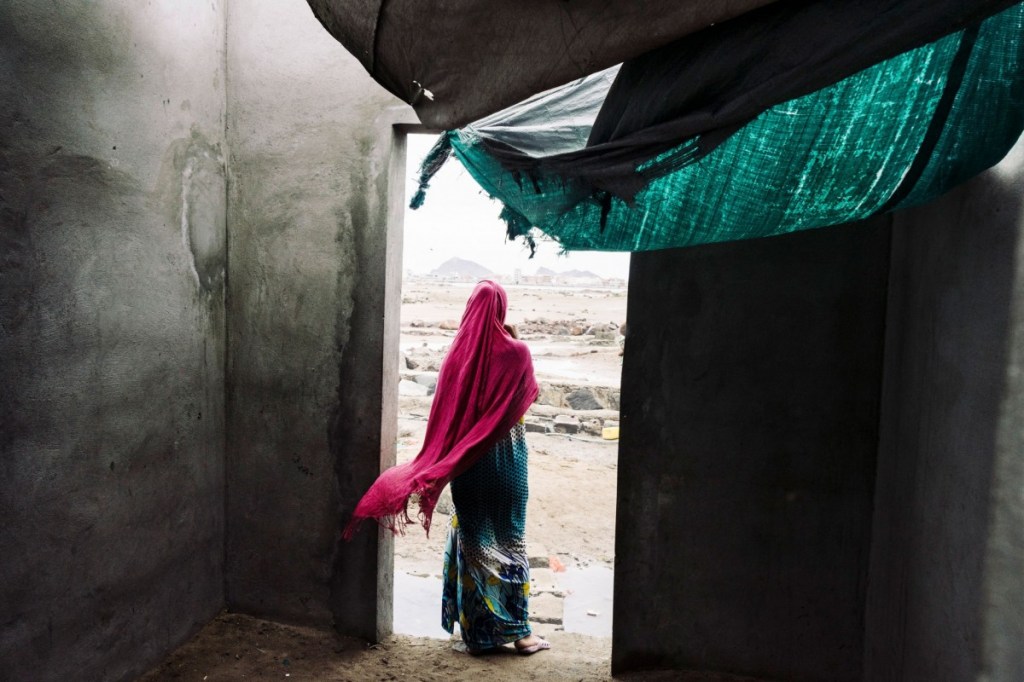
“Jameela Abdullah stands at the entrance of a roofless house where her family has been living for two months after they escaped fighting in their village of Al-Jarahi. In southern Yemen, a trickle of Yemeni refugees has grown into a flood, with hundreds abandoning their homes each day. Refugee camps have sprung up across the region, adding pressure on western aid agencies and hospitals while worsening a humanitarian crisis that’s already considered the most severe in the world. Most people were running away from clashes near the strategic port city of Hodeida, under siege by Yemeni forces aligned with a U.S.-backed coalition, led by Saudi Arabia and the United Arab Emirates.” (December 31, 2018)
Both photos and captions from the Pulitzer website that briefly describe some of the works from the award winning photographer Lorenzo Tugnoli. Both follow a trend of having a story behind the photo, they both provide almost an eerie feeling to them. The first one above, of Abdullah, we know that he had lost his leg at the same spot two years prior to the photo, the background information provides enough for a story in a viewers mind. The scenery in the background is also somewhat beautiful, the mountains and blue sky, how the sunlight is peering in through the clouds. It all creates a certain contrast that brings the photo together. The second photo represents something more tragic though, the destruction of the town provides a sense of sorrow for the viewers. It provides a depth with the objects in the photo, the twisted dirt road, the same mountainous terrain seen in the first photo as well is seen in the background, blended with the dark clouds.
In both of the photos, the photographer uses rule of thirds. He breaks up the medium into sections in order to create art. The photographer was able to make not-so beautiful scenery look appealing by focusing on composition. In the second picture, he uses leading lines to shift the viewers focus to the scenery in the background.
 asturdevant_com220